
Affair Recovery, Rebuilding Trust, and Finding a Path Forward
Few experiences can destabilize a relationship as profoundly as discovering an affair.
Whether you are the partner who was betrayed, the partner who had the affair, or a couple trying to understand what happens next, infidelity can bring an intensity of emotion that makes it difficult to think clearly. Anger, grief, shame, fear, confusion, guilt, and uncertainty can arrive all at once. You may find yourself asking questions you never imagined you’d have to ask:
Can we recover from this?
How could this have happened?
Can I ever trust my partner again?
Do I even know what I want anymore?
Is there a way forward together—or is it time to let go?
Infidelity therapy provides a structured, supportive space to slow the process down, understand what has happened, and determine what comes next.
When Trust Has Been Shaken
In the immediate aftermath of discovering an affair, it is common to feel as though your emotional world has been turned upside down.
The hurt partner may experience intense anger, grief, humiliation, anxiety, preoccupation, or a desperate need for answers. You may replay conversations, search for inconsistencies, or find yourself unable to stop thinking about what happened.
The partner who had the affair may experience guilt, shame, fear, defensiveness, ambivalence, or a profound sense of uncertainty about how to begin repairing the damage.
Both people may feel overwhelmed.
This is often not the time to make immediate decisions about the future of the relationship. There may be important practical considerations to address, including creating emotional or physical space, establishing boundaries, seeking appropriate medical testing when relevant, and identifying trusted sources of individual support.
Early affair recovery is often about creating enough stability to begin thinking clearly again. You do not have to know whether you are staying together forever before beginning therapy.
You only need enough willingness to begin understanding what has happened.

Moving From Crisis Toward Understanding
As the initial intensity begins to settle, another set of questions often emerges.
Why did this happen?
What was happening in each of us?
What did the affair mean?
What had been happening in the relationship before it occurred?
What does this reveal about what needs to change?
This stage of infidelity recovery is less about collecting every possible detail and more about making meaning from the experience.
There is an important distinction between seeking information that helps you understand and seeking information that continually reopens the wound. In the aftermath of betrayal, it can be tempting to become consumed with details that provide momentary certainty but ultimately intensify distress.
Therapy can help create a more thoughtful container for these questions.
We can work toward understanding the impact of the betrayal while also exploring the context in which it occurred—without using context as an excuse or minimizing responsibility.
An affair does not have one simple explanation. Understanding why something happened is different from justifying it.
The work is to hold both truths.
What Does Healing Look Like?
There is no single outcome that defines successful affair recovery.
For some couples, therapy becomes a process of rebuilding the relationship. For others, therapy provides clarity about whether continuing together is right. Some couples ultimately separate while working toward a healthier and more respectful way of doing so.
If you choose to remain together, rebuilding trust requires more than deciding to “move on.” It often involves:
- accountability and genuine remorse
- creating greater transparency and emotional safety
- understanding the vulnerabilities that existed within the relationship
- learning how to talk about painful experiences without becoming trapped in repetitive conflict
- addressing the underlying relational patterns that contributed to disconnection
- developing new ways of responding to one another
- rebuilding friendship, intimacy, and emotional connection
- establishing boundaries and agreements that both partners can genuinely uphold
Trust is not restored because someone promises that it will never happen again.
It is restored gradually through consistent experiences of honesty, responsiveness, accountability, and repair.
My Approach to Infidelity Therapy
My approach to infidelity therapy is grounded in warmth, directness, clinical experience, and a deep respect for the complexity of relationships.
I do not approach affairs as evidence that one person is simply “the problem.” At the same time, I believe meaningful recovery requires accountability. Understanding the larger relational context does not remove responsibility for the choices that were made.
My role is to help both partners understand what is happening beneath the immediate conflict while remaining attentive to the very real impact of betrayal.
Drawing from more than 15 years of clinical experience and advanced training in relational and systemic therapy, I integrate research-informed approaches including Emotionally Focused Therapy (EFT), the Gottman Method, ACT, CBT, and trauma-informed care. My work is individualized because no two relationships—and no two experiences of betrayal—are exactly alike.
I am particularly attentive to the emotional patterns that can become amplified after an affair: pursuit and withdrawal, anger and defensiveness, questioning and avoidance, shame and blame.
These cycles can quickly become self-reinforcing.
One partner asks for reassurance. The other feels overwhelmed and withdraws. The withdrawal creates more anxiety, which leads to more questioning. The questioning produces more defensiveness. Both people become increasingly convinced that the other does not understand them.
Therapy can create an opportunity to interrupt that cycle.
Instead of continuing to have the same conversation at home, couples can begin having a different kind of conversation in the therapy room—one that makes room for honesty, accountability, vulnerability, and meaningful response.

From Understanding to Repair
Insight is important, but insight alone does not necessarily create change.
The work of recovery involves practicing something different.
If conversations repeatedly become explosive, we can work on slowing the cycle down before either partner becomes emotionally flooded.
If the hurt partner is struggling with intrusive thoughts or fears that another betrayal is imminent, we can develop ways of responding to those experiences without allowing them to completely take over daily life.
If the partner who had the affair struggles to tolerate the hurt partner’s pain, we can work toward greater capacity to remain present, accountable, and emotionally responsive.
If intimacy has become complicated, we can explore what has changed emotionally and physically rather than expecting sexual connection to simply return once the affair has been discussed.
And if the couple ultimately decides to separate, therapy can still provide a meaningful space for clarity, communication, grief, and thoughtful decision-making.
The goal is not to force reconciliation.
The goal is to help you move from reactivity toward greater clarity about what you need, what you value, and what kind of relationship you want to create from here.
You Don’t Have to Decide Everything Right Now
One of the most difficult aspects of infidelity is the pressure to know what comes next.
You may feel that you need to decide immediately whether to stay, leave, forgive, confront, disclose, or rebuild.
You don’t necessarily have to.
In the early stages, it can be enough to create stability, understand what has happened, and begin taking care of yourself.
Over time, more clarity can emerge.
Three questions often become particularly important:
- What would be required to heal from the breach of trust?
- What would need to change for this relationship to become healthier and more sustainable?
- What do I need to accept, and what does forgiveness mean to me?
These questions rarely have simple answers. Therapy provides space to explore them without rushing toward a predetermined outcome.
Why Work With an Infidelity Recovery Specialist?
Affairs involve more than a single event. They can touch attachment, sexuality, identity, family life, trust, self-worth, communication, and the future you imagined for your relationship.
This complexity requires a therapist who can hold multiple perspectives at once.
Since establishing my practice in 2014, I have worked with individuals and couples navigating trust ruptures, intimacy concerns, relationship transitions, sexuality, anxiety, and complex relational dynamics. My ongoing clinical consultation, advanced training, and work with other therapists also allow me to continually refine how I approach challenging relational situations.
Clients often describe my style as warm and approachable while also appreciating that I am willing to be direct when something important needs to be addressed.
I don’t believe therapy should simply provide a place to talk about what happened.
It should help you understand what is happening, develop the capacity to respond differently, and make decisions that are more aligned with the person and relationship you want to create moving forward.
“Prior to seeking help, we had a solid relationship but were unable to weather turbulence in a healthy way— something stressful or out of our control would throw us way off kilter. Now, we have a better language base to discuss difficult topics and to head off dead end tangents—we can catch each other straying across the net. I personally feel like I have more clarity on issues that my partner brought up before but that never were properly addressed. Making the commitment to the process was invaluable to our relationship. Knowing that we both wanted to be there helped me throw myself into the sessions and stay honest when it would have been easier to brush things under the rug. Couples therapy really helped me to fully express myself (without being cut off and without worrying that the response would be defensive instead of introspective) and in turn hear my partner’s frustrations. I’ve always been a fan of therapy, and this intensive format really helped us make important changes and elaborate on our feelings in a positive way.”
— Former Client
“Jennifer has an amazing ability to put others at ease. I would want to sit across from her and share my heart. She has a very comforting presence that comes from deep within; she is made for this work.”
— Jessica Ellis, LMFT
Begin Affair Recovery With a Conversation
You do not need to know whether your relationship will survive before reaching out. You do not need to have the right words.
And you do not need to arrive knowing exactly what you want to accomplish in therapy.
If you are trying to understand what happened, rebuild trust, determine whether repair is possible, or find a healthier path forward, I offer a complimentary 20-minute consultation to discuss what you’re experiencing and whether working together may be a good fit.
Infidelity can change the story you thought you were living.
It does not have to determine what happens next.
Contact me for an Exploratory Call
Recent blog posts about infidelity therapy
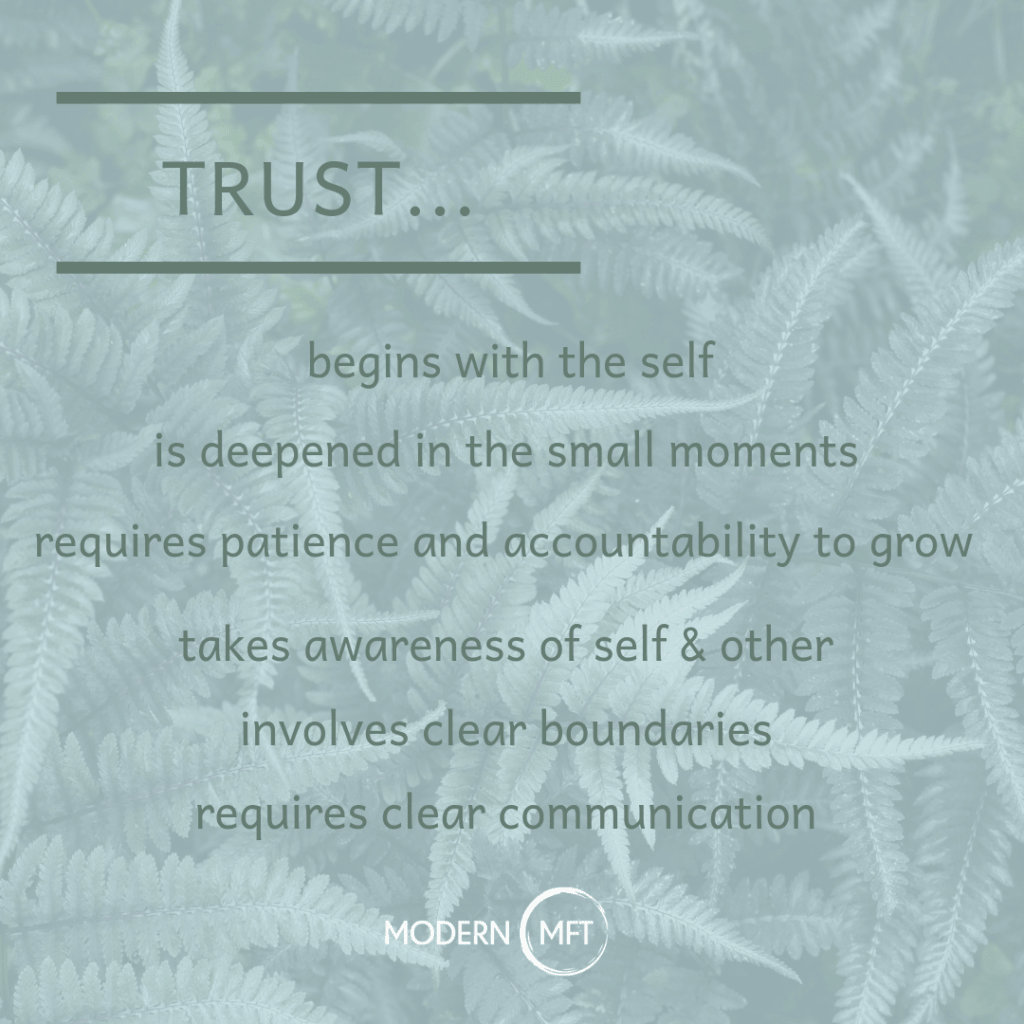
Deepening and Repairing Trust Involves This…
When trust feels solid, we feel a strong sense that we are on the same page with someone. We feel they truly understand and value us and respect our wishes and views. But how is it built? What exactly is involved?


